Wednesday, 18 January 2012

Degenerative Joints

Degenerative joints are a natural part of the life of a joint. As they wear, become damaged, are stressed by excessive use, trauma, infection, inflammatory arthritis, they will begin to deteriorate. Deterioration, that includes narrowing of cartilage, osteophytic spurs on bones on either side of the joint and other changes do not necessarily cause pain.

Pain is associated with inflammation of the joint and in the majority of cases, degenerated joints are not inflamed or there is minimal inflammation present. One patient today presented with severely degenerated hip joints. Her joints were so worn, she basically had bone rubbing on bone. The spectacular thing was that she had minimal or no inflammation and pain. However, every time she moved the joint loud cracking was heard. These sounds occurred multiple times throughout a range of motion or when she actively contracts muscles around the joint maintaining its position.

When the joint becomes degenerated and inflamed, pain can be minimal, felt when the joint is compressed by a thumb or finger (tenderness) or active movement. However in some cases the pain is significant, producing sharp twinges of pain on certain movements and in particular when starting to move, following resting (either lying down or sitting in the case of the hip osteoarthritis). The muscles around the joint react to pain in the joint and become pain-producers as well.

So, in the case of non-painful degenerative joints, as long as you can do what you need to do and not limited by the stiffness of joints, surgery is probably unnecessary. If it is painful or stiff sufficiently that your quality of life is bad, you should speak to a surgeon and in the case of the hip joint, consider a hip replacement.

Monday, 16 January 2012

Tension Headaches

Tension Headaches are extraordinarily painful. They can occur anywhere around the head, on one side or both. The pain is usually steady, persistent and low to moderate grade. However, sufficient for many people / sufferers to undertake scans of their brain (either MRI or CT), to determine whether there is a brain tumour / bleed present.

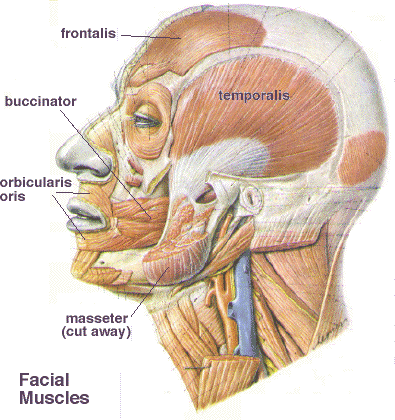
Tension headaches are associated with tension in muscle that sits over the skull, both above the eyebrows, temporal region and above the ears in the parietal region. They can also involve the muscles at the back of the skull. When the muscles are tight, over an extended period of time, a small amount of inflammatory fluid occurs. In the skull this appears to collect in small trapped rivers, about 1-2 cm long and 2-3 mm in width.

When applying massage to these muscles across the width of these fluid pools, you will find that they seem to flick under your finger. There is usually significant discomfort when massaging these areas but do so. After a few days of consistent, GENTLE massage, the tenderness will resolve and the tiny rivers will disappear.